Last updated November 22, 2026
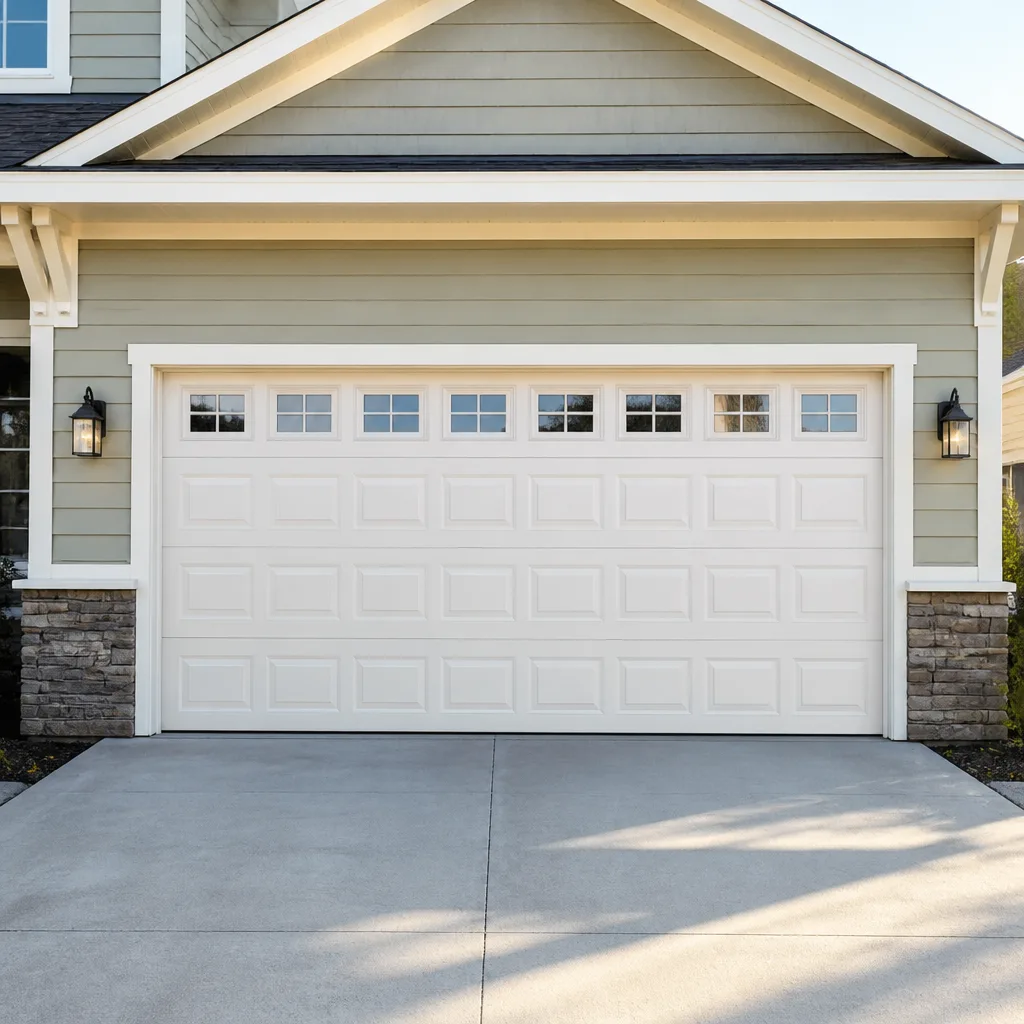 Raised-panel steel
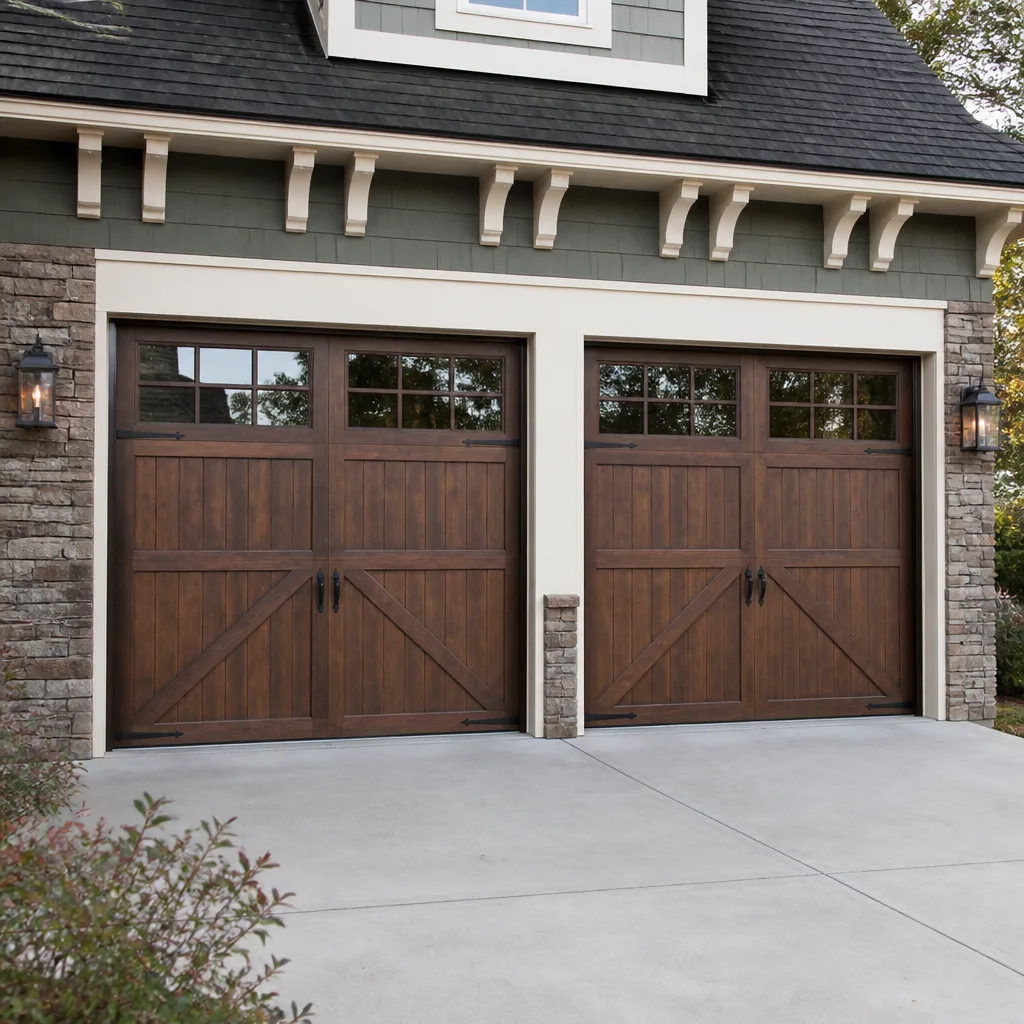 Carriage house
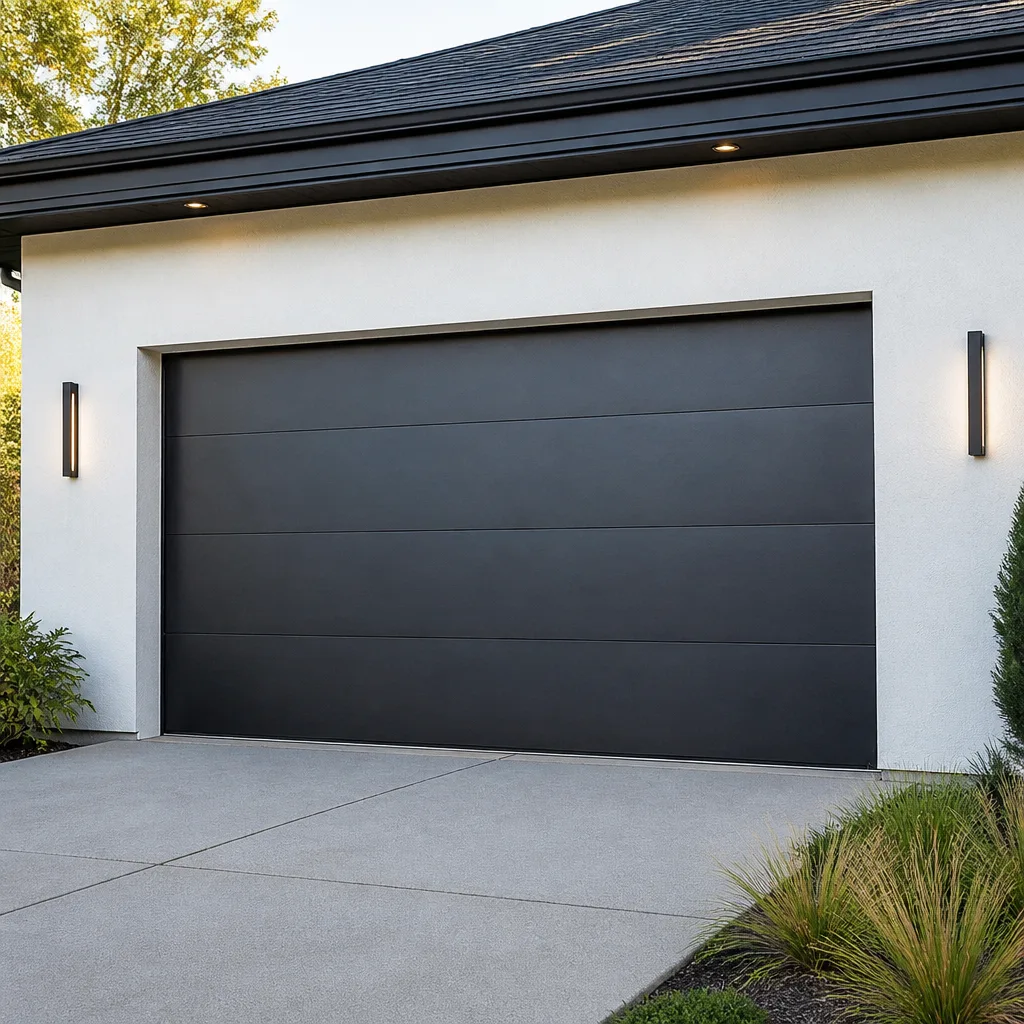 Modern flush
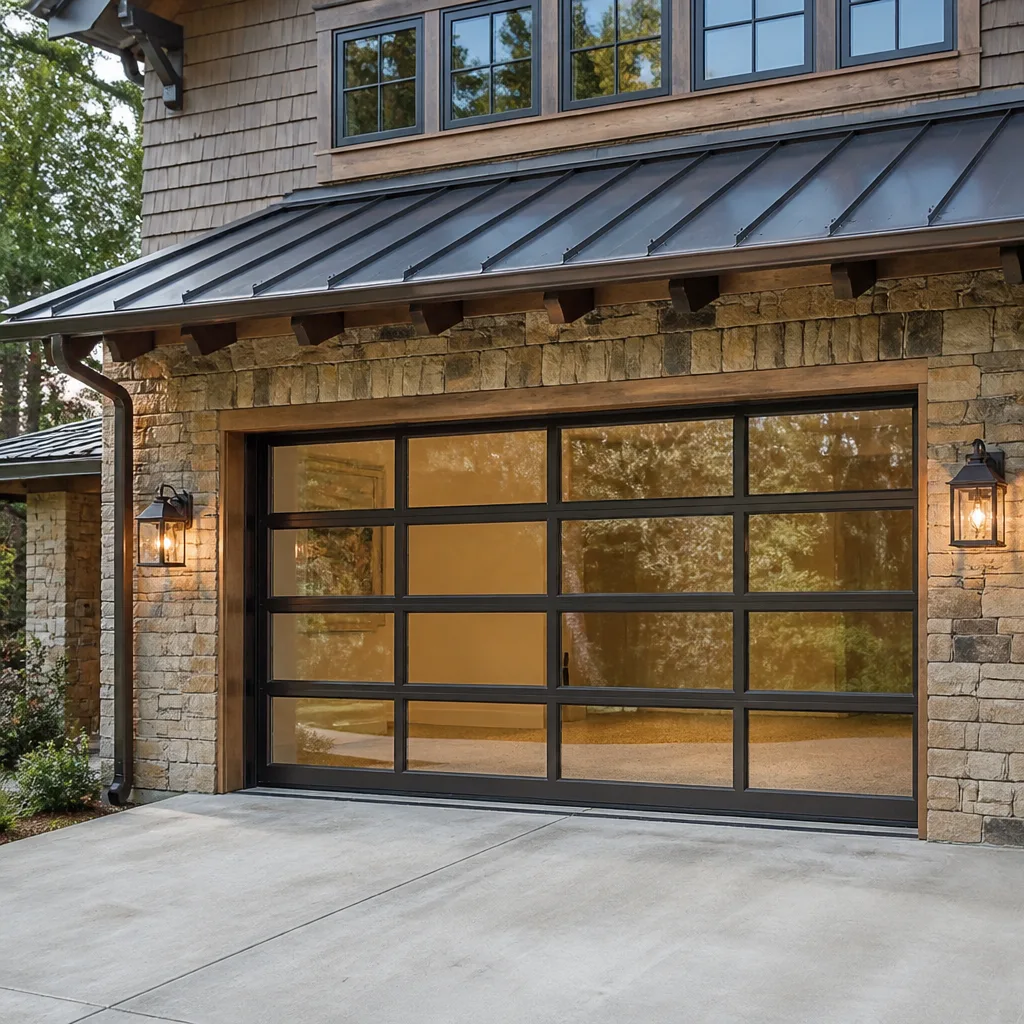 Full-view glass
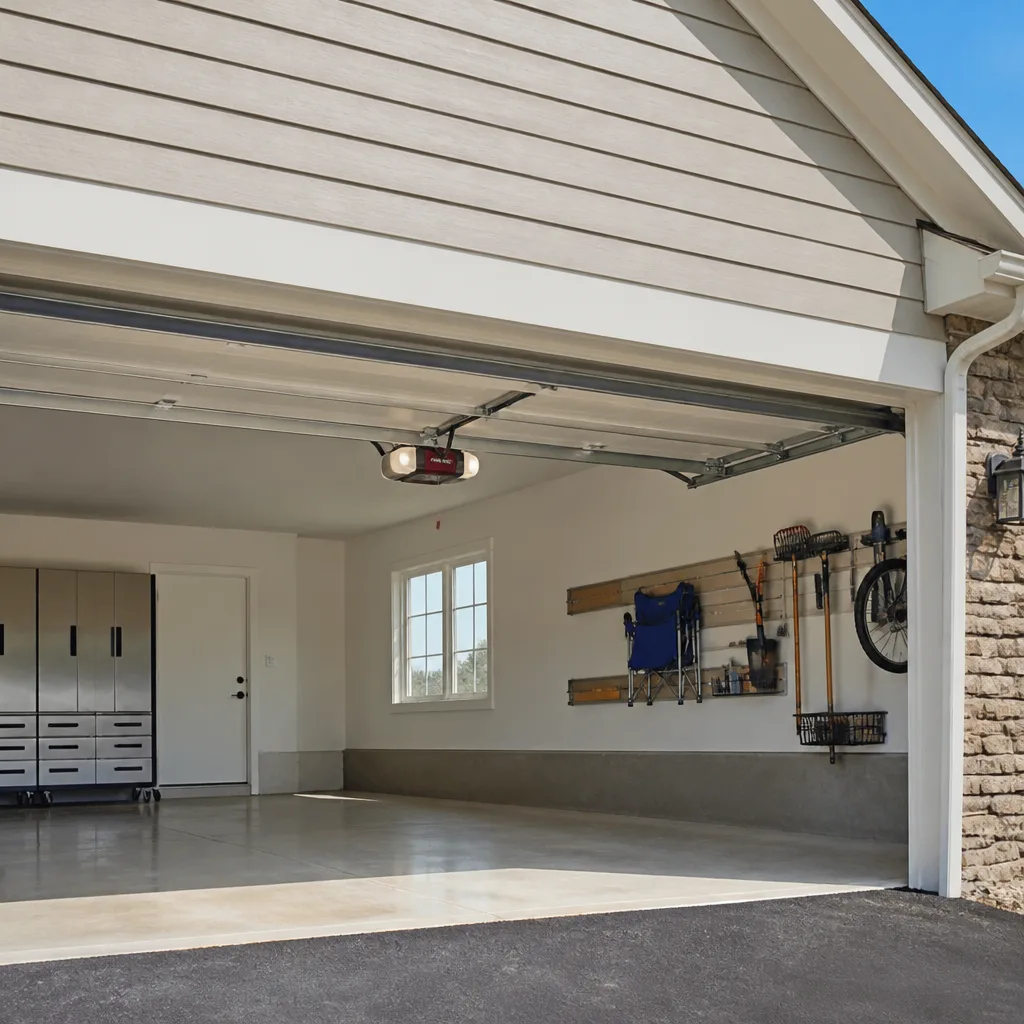 LiftMaster openers
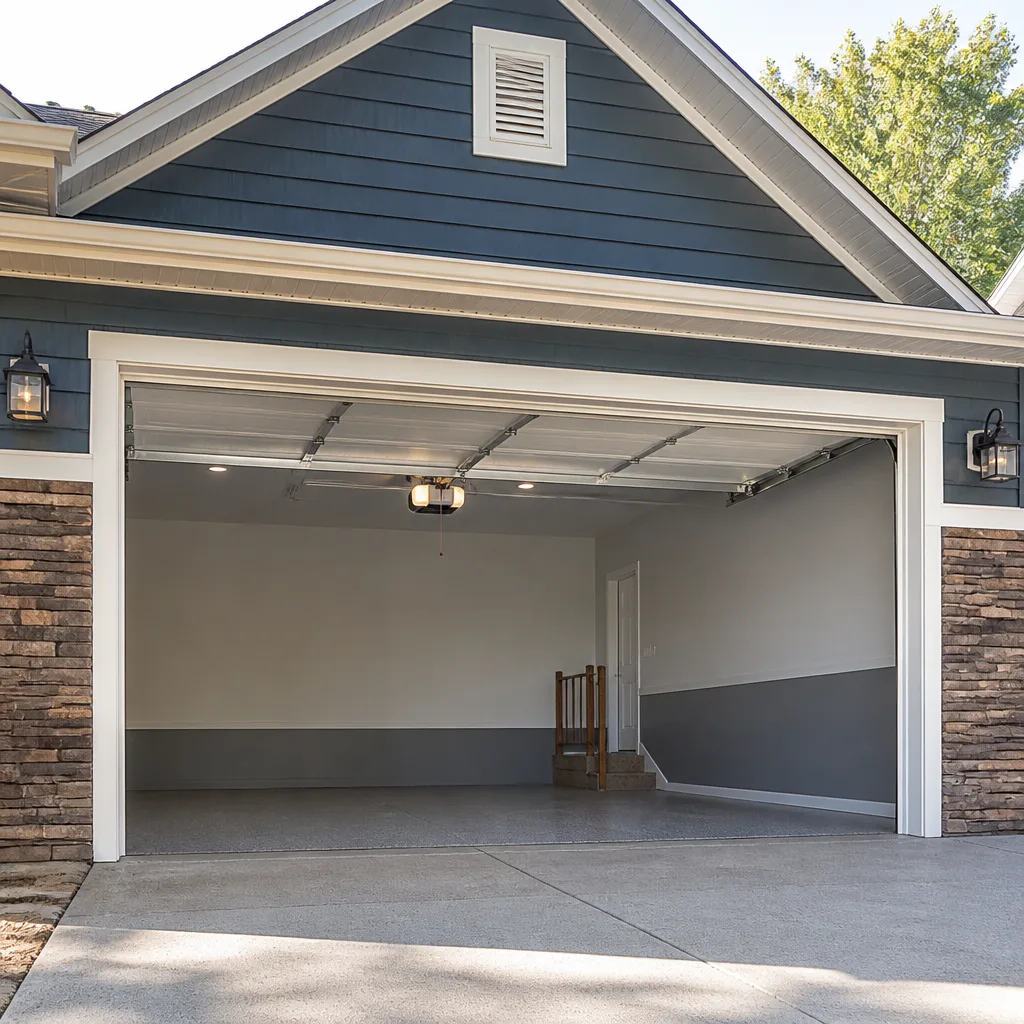 Chamberlain openers
Full 25-point door and opener safety check with every visit - springs, cables, rollers, tracks, and your LiftMaster or Chamberlain opener included
You get a price before we start. It does not change when the pro arrives.
Get your free estimateDIY vs Professional Garage Door: The Spring Hill Homeowner’s Decision Guide
A torsion spring on a standard residential door stores roughly 100 foot-pounds of torque. That’s not a scare tactic; it’s physics, and it’s the number that should sit behind every DIY decision you make about your garage door. Most online arguments about fixing your own door skip that part and jump straight to opinion. This guide doesn’t. We’re going to separate garage door work task by task, because changing a light bulb on your opener and winding a torsion spring are not the same kind of job, and treating them the same is where homeowners in Spring Hill get hurt, waste money, or end up with a door that won’t close. You’ll learn which tasks are genuinely safe to handle, which need a technician, and what the real numbers look like.
Quick Answer
Adjusting safety sensors, programming a remote, and lubricating the track and rollers are safe to do yourself. Replacing a torsion spring, replacing cables, or installing a new door should be done by a trained technician because the stored energy in the spring system and the code requirements for installation make those jobs genuinely dangerous or permit-regulated. For everything in between, the honest answer usually comes down to whether you own the right tools and whether a mistake could cost more than the repair.
Styles & brands we work with
- Raised-panel steel
- Carriage house
- Modern flush
- Full-view glass
- LiftMaster openers
- Chamberlain openers
Table of Contents
- Drawing the Line: Why Garage Door Work Isn’t One Skill Level
- What’s Genuinely DIY-Safe in Spring Hill
- Why Torsion Springs Are the One Job You Should Never DIY
- Florida Building Code and DIY Door Installation in Spring Hill
- The Honest Cost Comparison: DIY vs Professional
- The Middle Ground: Buying Parts and Hiring Labor
- How Spring Hill’s Climate Affects Your Door
- When to Call a Professional
Drawing the Line: Why Garage Door Work Isn’t One Skill Level
Walk into any hardware store and you’ll find garage door parts on the shelf. That fact alone convinces plenty of homeowners that all garage door work is homeowner-level work. It isn’t. The trade covers a range that runs from “read the manual once” all the way to “one wrong move and you’re in the emergency room,” and those two ends live under the same roof.
Picture a spectrum. On the easy end, you have tasks that touch only electronics or surfaces: re-pairing a remote, resetting a limit switch, spraying lubricant on a hinge. Nothing there stores energy that can hurt you, and the worst outcome of a mistake is a door that beeps at you. In the middle, you have jobs that are physically demanding and require knowledge but aren’t inherently dangerous if you’re careful: replacing rollers, adjusting track brackets, swapping a belt on a chain-drive opener. On the far end, you have spring and cable work, which is heavy, stored-energy, load-bearing mechanical work. That end is where the trade earns its safety reputation.
Here in Spring Hill, most of the homes we talk to were built within the last few decades, with standard seven-foot doors and either torsion or extension springs depending on the model and builder. That means most of the DIY questions we hear are the same handful repeated. The task breakdown below is the one we walk through on the phone when someone asks whether they can tackle a repair themselves. It’s a decision about matching the task to your ability, not one sweeping rule about your skill as a homeowner.
What’s Genuinely DIY-Safe in Spring Hill
Some garage door work is well within reach for a careful homeowner with a ladder and a manual. Here’s what we’d put in that category without hesitation.
- Reprogramming a remote or keypad. Modern openers from Chamberlain and Genie have a “learn” button on the motor head. Press it, then press your remote, and you’re done. This is a two-minute job.
- Aligning safety sensors. If your door reverses for no reason, the two small sensors near the floor are usually the culprit. Check that their lenses are clean and their indicator lights are solid, then nudge them until they point at each other.
- Lubricating the track and hinges. A light coat of white lithium grease or a silicone-based lubricant on the hinges, rollers, and spring (never on the track surface where the rollers ride – that attracts grit) quiets a noisy door in minutes.
- Replacing a light bulb in the opener. Check the manual for the correct wattage. Some newer openers specify LED-only for the light socket, and using the wrong bulb can trip the logic board.
- Cleaning and balancing the door by hand. Disconnect the opener, lift the door halfway, and let go. A balanced door stays where you put it. If it drops or rises, that’s information you need before calling anyone.
Notice what’s not on that list. Nothing here involves a spring, a cable, or a high-tension bracket. That’s deliberate. If a task requires you to loosen a bolt that’s under tension, take it off the DIY list immediately.
Why Torsion Springs Are the One Job You Should Never DIY
Torsion springs are the horizontal coil mounted above the door on a steel shaft. When the door closes, the spring winds and stores the energy needed to lift the door’s weight back up. A typical residential door weighs between 130 and 250 pounds, and the spring is doing most of the lifting. That’s what those 100 foot-pounds of torque represent: the energy you have to put in to wind the spring, and the energy it will release if something fails mid-job.
What makes a spring replacement uniquely dangerous isn’t any single step. It’s the whole task. You need winding bars rated for the job, a way to hold the door in place, knowledge of which way the spring winds for your specific door, and a sense of how much tension is still left when you start. A cable that slips, a bar that jumps out of the winding cone, or an improperly seated spring on a shaft can all turn into a serious injury in under a second. Emergency rooms know the pattern well enough that professional technicians treat spring work as the single most safety-sensitive task in the trade.
This is also where we are most direct with Spring Hill callers: we don’t recommend watching a video and trying it anyway. There’s a reason spring repair is a named specialty rather than a line item on a general handyman’s card. If your spring is broken, or you can see a gap in the coil, stop cycling the door. The door is now being held up primarily by the opener, which isn’t designed for that load, and the motor or gears will fail next. Call garage door spring repair before the second problem starts, and we’ll replace the spring and check the cables and drums at the same time. Spring repair done right the first time is cheaper than the alternative every time.
Florida Building Code and DIY Door Installation in Spring Hill
Here’s the piece most DIY guides skip entirely: installing a new garage door is a permitted job in Spring Hill. In Hernando County, a garage door replacement typically requires a building permit and an inspection, and the door you install has to meet Florida’s wind-load requirements for your zone. That’s true even if you install it yourself. The code requirement isn’t about skill level; it’s about structural safety and insurance compliance.
What does that mean in practice?
- Check with the city before you buy. The City of Spring Hill building department is the authority on whether your specific project needs a permit, so ask them directly before ordering a door. Rules vary by structure type and by the door’s wind rating.
- Buy a door rated for your wind zone. A garage door that wasn’t engineered for Florida’s wind loads is a compliance problem even if it fits the opening.
- Schedule the inspection. Even homeowner-installed work gets inspected. The inspector will check anchors, reinforcement, and how the door is secured to the framing.
- Keep your documentation. Product specs and inspection records matter when you sell the home or make an insurance claim.
None of this is meant to talk you out of a project. It’s meant to make sure the door you install protects your home and your investment. Our garage door installation work includes pulling the permit and coordinating the inspection as part of the job, which is one less moving piece if you’d rather not handle it yourself.
The Honest Cost Comparison: DIY vs Professional
Here’s the part where DIY looks cheaper on paper and often isn’t in practice. The savings only exist if you already own the tools, buy the right parts the first time, and get it right on the first attempt. The moment any of those fails, the math flips. Below are typical estimates for the Spring Hill market, which vary by door size, brand, and spring type. The written estimate from the technician is what sets the final price, not the range below.
- Torsion spring replacement (one spring): typically $180 to $340 professional. DIY parts cost is roughly $60 to $120, but you still need winding bars, and a mistake can damage the door or the opener.
- Matched pair of torsion springs: typically $300 to $550 professional. Many technicians replace springs in pairs because a new spring next to an old one wears unevenly. Pair pricing is roughly double single-spring pricing.
- Opener repair (logic board, gear, or capacitor): typically $150 to $350 professional, depending on the brand. The right part for a Chamberlain or Genie model is not always available at the local box store.
- New opener installation: typically $350 to $800 depending on drive type and whether the door also needs sensors or reinforcement. A DIY installation can save $150 to $250 in labor if you have the tools and a helper.
- Full door installation: typically $900 to $2,500 or more, depending on door style, size, and insulation. DIY on door installation is rare because of the permit, inspection, and weight involved.
- Sensor replacement or alignment: typically $100 to $180 professional. This is the one where DIY is often the better call if you’re comfortable with a screwdriver.
When you factor in a second trip to the hardware store, a broken tool, or a re-do after a mistake, the professional price becomes the cheaper number more often than most homeowners expect. Free estimates make the comparison easy: you get a written price before any work starts, so you can weigh it against the DIY cost with real numbers in hand.
The Middle Ground: Buying Parts and Hiring Labor
There’s an option between “do it all yourself” and “hand the whole job to a company,” and most guides ignore it. You buy the parts yourself and hire a technician for labor only. When you know exactly what you want, that can work.
When it works well:
- You’ve already identified the part number from the manufacturer’s manual and confirmed it fits your model and door size.
- The part is a common one, like a replacement remote, a belt for a Genie opener, or a set of rollers.
- The job doesn’t require the technician to warrant a part they didn’t source.
When it doesn’t work:
- The part turns out to be wrong after the technician opens it. You’re now paying for a second visit.
- The door needs springs matched to its actual weight, and generic springs on a shelf don’t do that.
- The installer can’t warranty the outcome. If the spring breaks in a month, you’re back to paying labor to install the replacement.
For our part, we’re happy to install a part you’ve sourced when it makes sense. What we won’t do is guess at fitment. When you call for Spring Hill garage door repair and the issue is a spring or a full opener, we prefer to source the part so the work and the warranty stay together. Ask for a free estimate and let the technician confirm what’s actually needed before you spend money on a part.
How Spring Hill’s Climate Affects Your Door
Spring Hill winters are mild, and that’s genuinely good news for your garage door. You don’t get the deep cold snaps that freeze bearings or crack seals in northern markets. What you do get is heat and humidity, and those two shape which repairs come up most often.
Heat is hardest on opener electronics and on the seal at the bottom of the door. A garage with afternoon sun exposure gets hot enough that logic boards in older openers can act up, and a bottom weather seal can dry out and crack within a few summers. We replace those seals routinely; they’re cheap, and replacing one before water gets under the door is easier than cleaning up afterwards. Humidity works on metal parts a little differently, encouraging surface rust on hinges, rollers, and the springs themselves. A light coat of lubricant twice a year goes a long way toward slowing that down.
Rain is the other local factor. A door that closes with a gap or a seal that’s flattened lets water onto the garage floor during our summer storms, and that’s a much bigger problem than a slightly noisy door. If your door doesn’t sit cleanly against the ground when it’s closed, a sensor or limit adjustment is the usual fix. That’s a task most homeowners can handle themselves after reading the opener manual, and it’s also the kind of thing a technician can knock out during a routine visit.
What isn’t a big factor here is impact damage from hail, which is uncommon in Spring Hill. If your door has dents, they’re more likely from a car or a bicycle than from weather.
See the difference
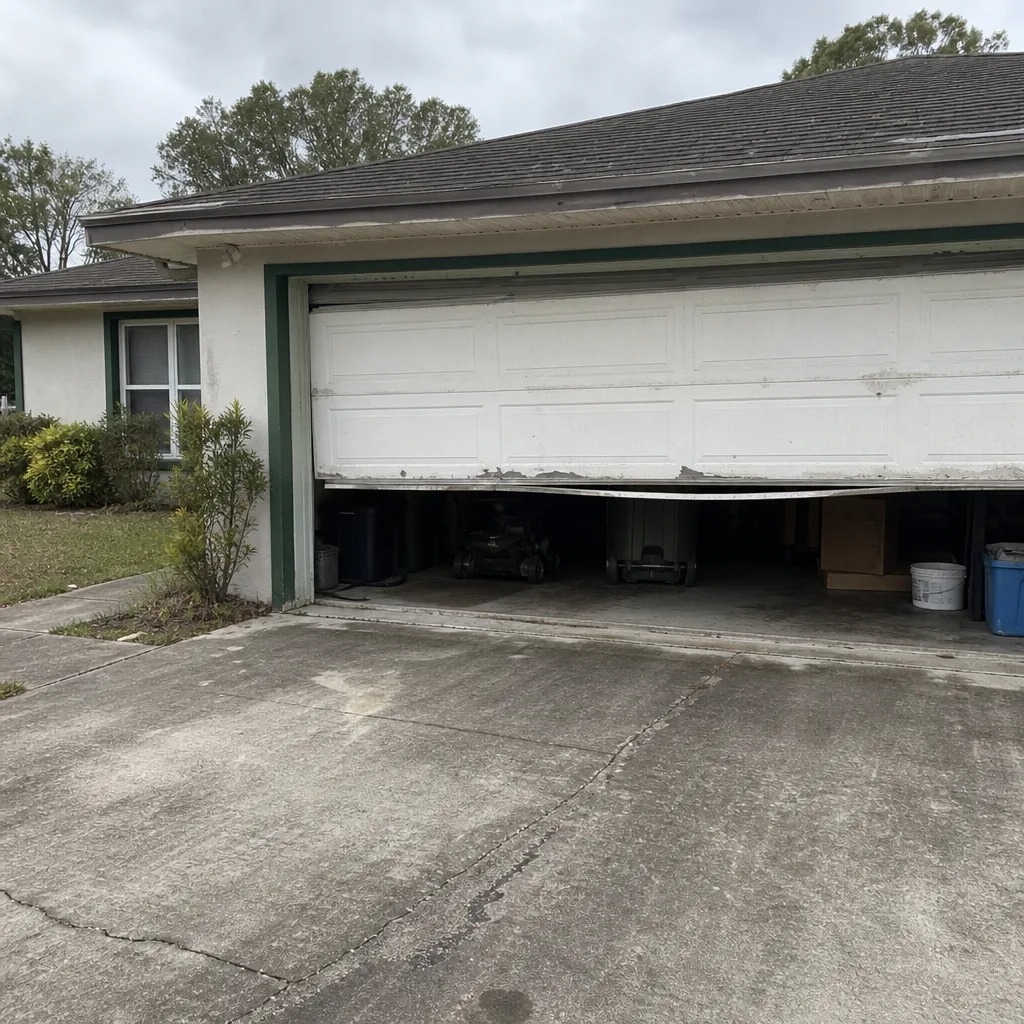 Before
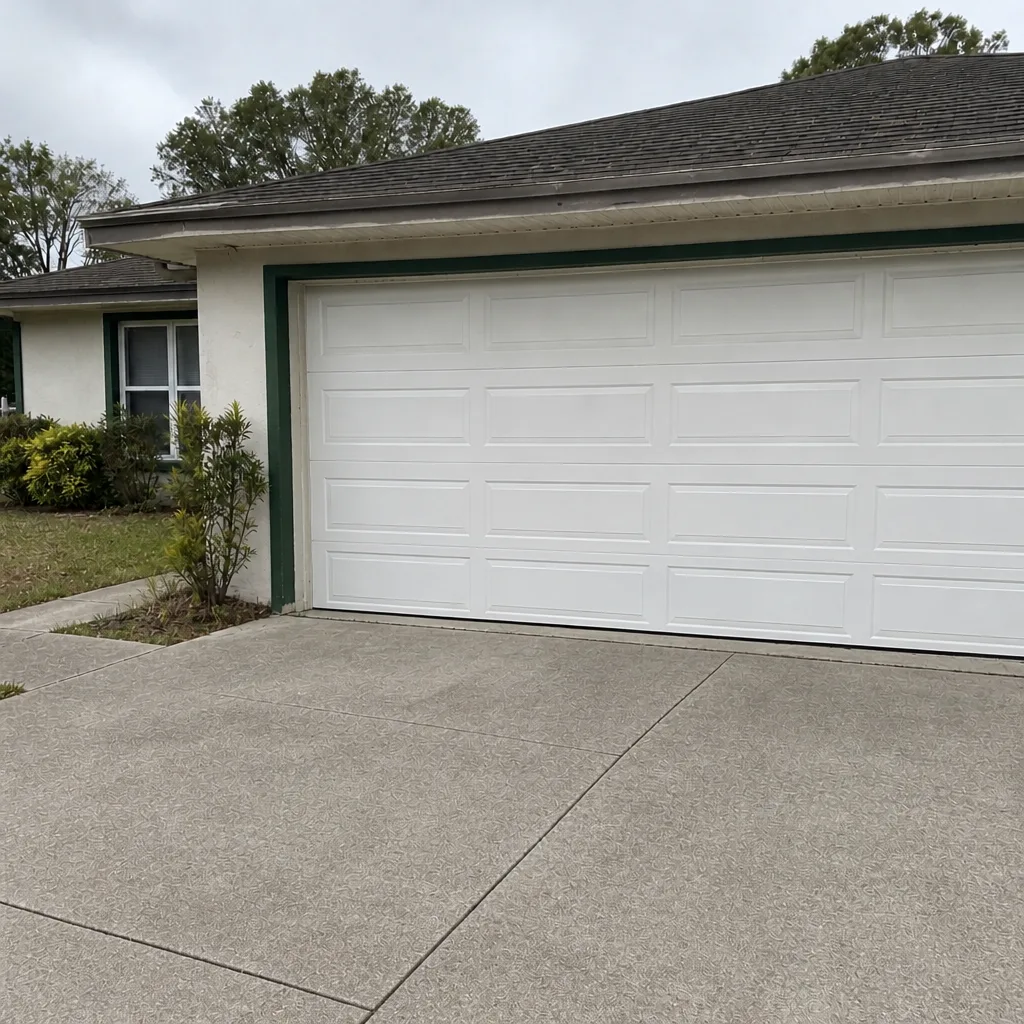 After
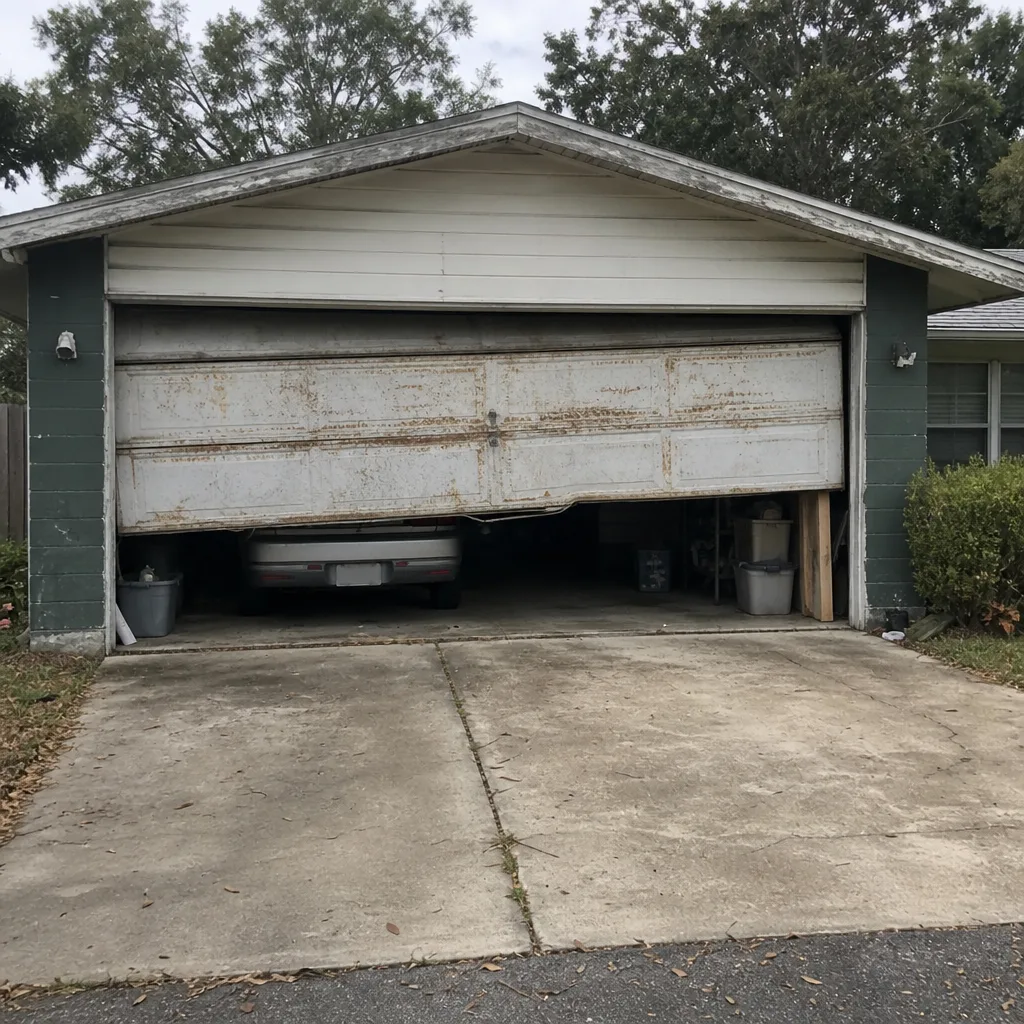 Before
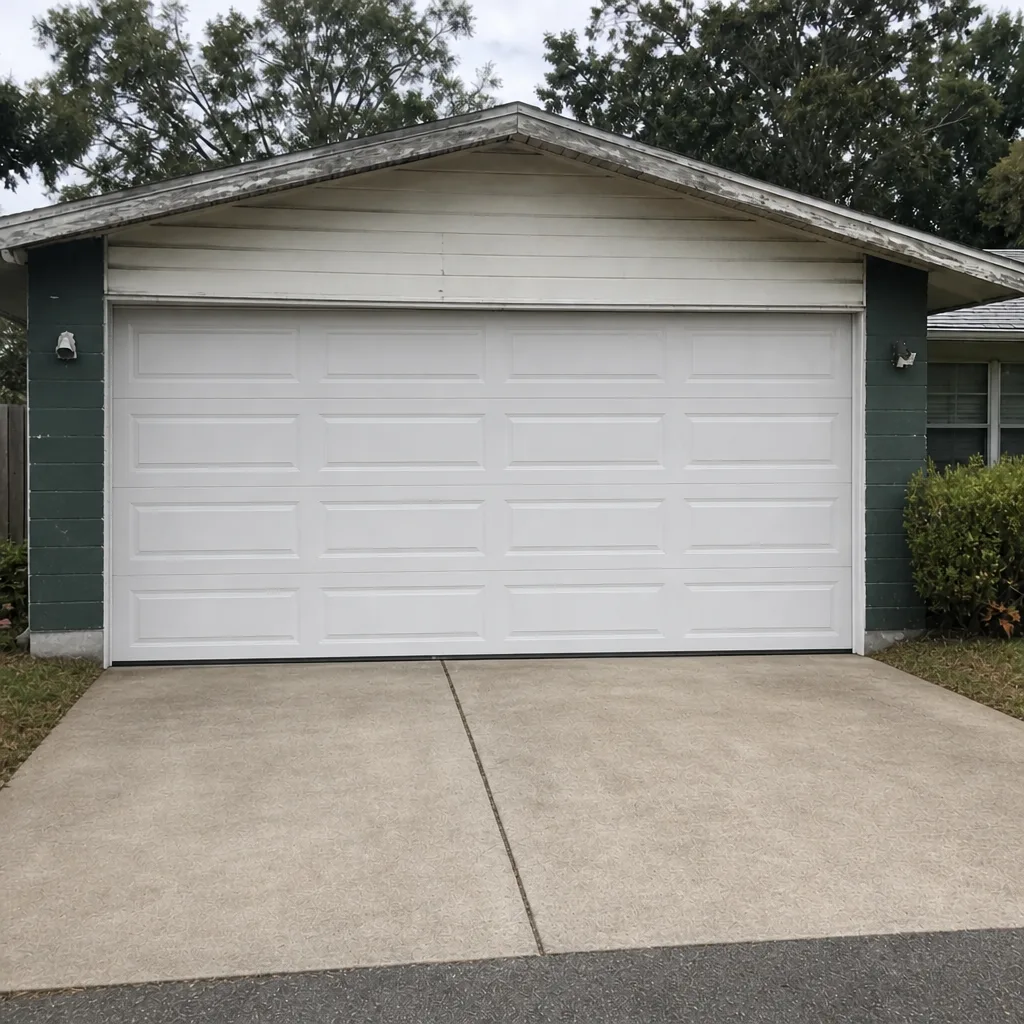 After
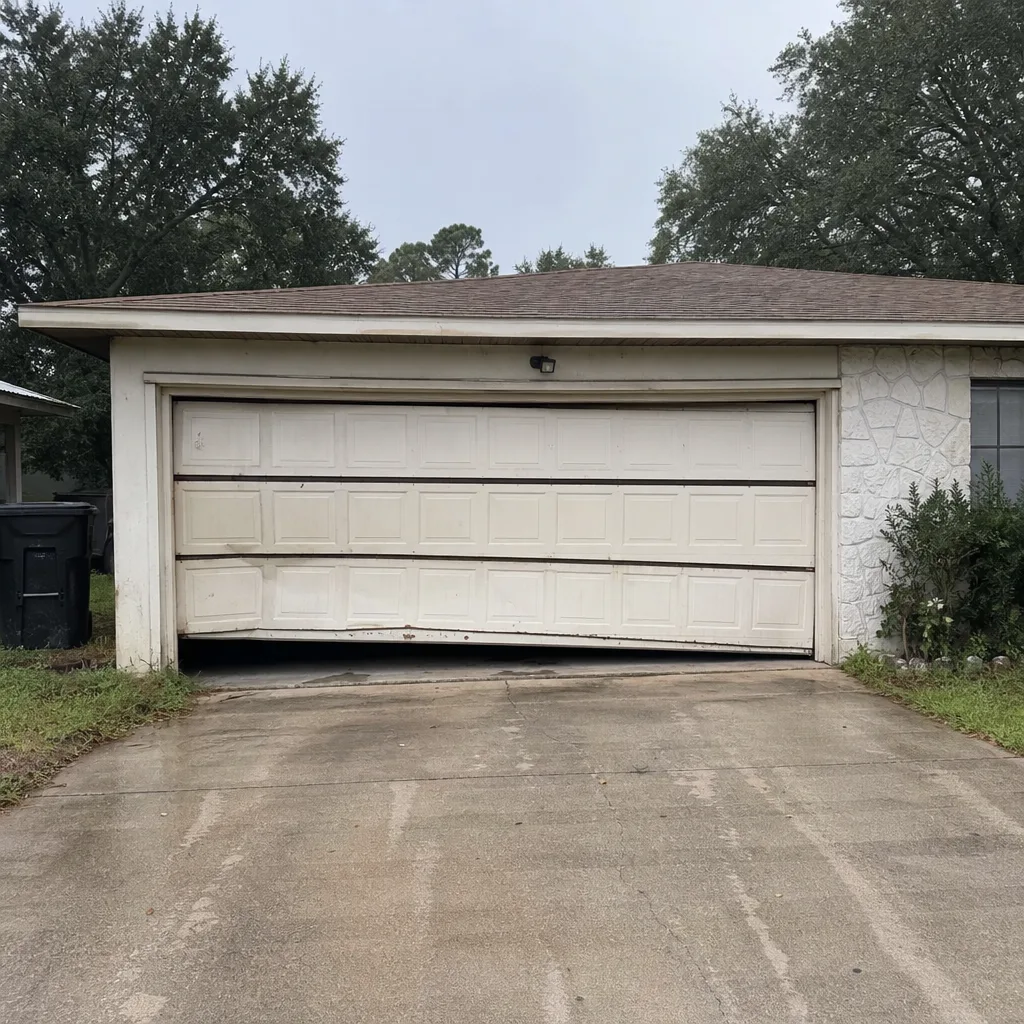 Before
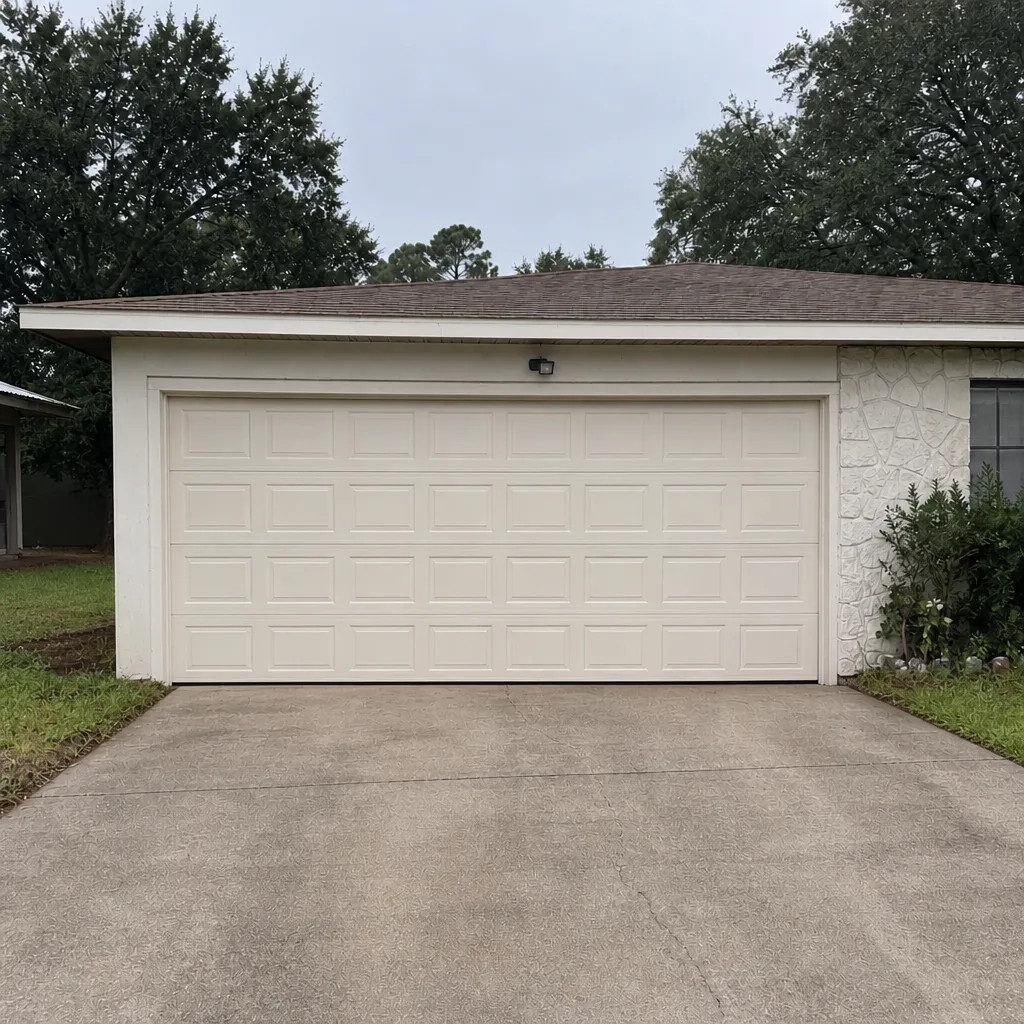 After
Common Mistakes to Avoid
- Wind a torsion spring without holding the door. Even if the spring seems slack, the door is still heavy, and it will drop when the spring is released. The door has to be secured to the shaft before any winding starts.
- Use the wrong winding bars. A screwdriver, a piece of rebar, or a socket taped to a broom handle is not a substitute. Actual winding bars are sized to the winding cone and rated for the torque. Anything else can slip out under load.
- Buy a door online without checking your wind zone. A garage door isn’t a commodity. A door that isn’t rated for Spring Hill’s wind requirements is a compliance problem even if it’s the right size.
- Skip the permit to save the hassle. The permit and inspection exist for the home’s structural safety, and skipping them creates a headache at resale or claim time.
- Try to lubricate a failing spring. Lubricant on a winding cone won’t fix a broken spring, and it makes a proper inspection harder. If the spring is broken, stop cycling the door.
- Diagnose an opener problem by buying a new opener. Many “dead opener” calls are actually a sensor, a remote battery, or a tripped breaker. A quick check beats a $350 replacement.
- Cycle a door with a visible gap in the spring coil. Every cycle with a broken spring puts the load on the opener and gears, and the second problem always costs more than the first.
When to Call a Professional
Call a technician if any of the following applies: you can see a gap in a spring coil, the door won’t stay up when you disconnect the opener, the door comes off its track, the cables have slack or are visibly damaged, an opener is making a grinding noise or won’t respond after a power reset, or you’re replacing the door entirely. Those jobs involve stored energy, load-bearing parts, or electrical work, and none of them are safe to wing. Spring Hill Garage Door Repair Co offers free estimates in Spring Hill. We work on the brand already in your garage, whether it’s a Chamberlain, Genie, Clopay, or Amarr system, and we handle the whole system from opener to overhead panel. When the door won’t move, neither does your day – that’s exactly why emergency service is a core part of what we do, not an add-on. Call (877) 792-6784 and we’ll get a technician scheduled. The local pro is licensed and insured as the state requires, the price is quoted and agreed before any work starts, and our technicians have up to 13 years of experience on systems like yours.
Frequently Asked Questions
We don’t recommend it. A torsion spring stores roughly 100 foot-pounds of torque, and a slip during winding can cause serious injury. Spring replacement also has to be matched to the door’s weight and cable setup, which is hard to do correctly without training. Call (877) 792-6784 for a free estimate on spring repair in Spring Hill – estimates are free.
Typical estimates are $180 to $340 for one spring and roughly double that for a matched pair, depending on spring type and door size. The written estimate from the technician sets the final price. Call (877) 792-6784 for an exact quote – estimates are free.
Usually yes. In Hernando County, replacing a garage door typically requires a building permit and an inspection, and the door has to meet Florida’s wind-load requirements for your zone. Confirm your specific project with the City of Spring Hill building department before you buy a door.
The price you’re quoted before work starts is the price you pay for that scope of work. If the technician finds something outside the original estimate, like a damaged cable or a bent track, they’ll explain it and get your approval before doing the extra work. Nothing gets added without your say-so.
Sometimes, yes. It works when you’ve confirmed the part number against your opener or door manual and the part is a common one, like a remote or belt. It usually doesn’t work for springs, which have to be matched to the door, or when the installer can’t warranty a part they didn’t source. Ask us about the specific job and we’ll tell you honestly which way we’d go.
The local professional we connect you with is licensed and insured as Florida requires. Our technicians have up to 13 years of experience on systems from LiftMaster, Chamberlain, Genie, Clopay, Amarr, Wayne Dalton, Craftsman, and Raynor. Call (877) 792-6784 to schedule a free estimate.
The Bottom Line
Garage door work doesn’t fit into a single DIY-or-hire answer, and the guide that tells you it does is the one to ignore. Sensor alignment, remote programming, and basic lubrication are safe for a careful homeowner and often worth doing yourself. Spring and cable work, and full door installation, belong with a trained technician because the stored energy and the code requirements make them genuinely dangerous or regulated. Weigh DIY cost against the real cost of a re-do, and get a written professional estimate before deciding. Spring Hill Garage Door Repair Co works on the brand already in your garage and handles the whole system from opener to overhead panel. Call (877) 792-6784 for a free estimate.
Spring Hill Garage Door Repair Co covers everything from snapped springs and failed openers to new door installation across the brands you already own. Learn more at Spring Hill Garage Door Repair Co, and explore our garage door repair and garage door opener repair services when you’re ready. When the door won’t move, neither does your day.
Written by the team at Spring Hill Garage Door Repair Co.